

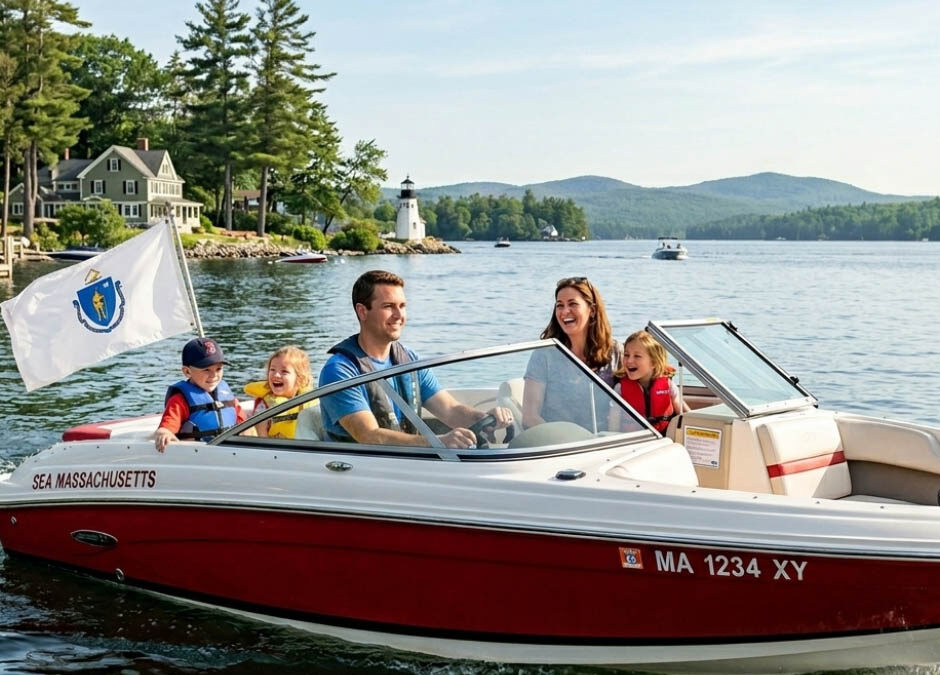
As of April 1, 2026, the Hanson-Milone Boater Safety Act marks a major turning point for recreational boating in the Commonwealth. While the law was passed in early 2025, this year represents the first hard deadline for a large segment of the boating community. For insurance agencies and vessel owners alike, this shift from “optional education” to “mandatory certification” changes the landscape of maritime risk management.
The 2026 Deadline: Who is Affected?
The new regulations require operators of all motorized vessels—including personal watercraft like Jet Skis—to carry a state-approved boating safety certificate. The 2026 update specifically targets a key demographic:
- Birthdate Trigger: Anyone born after January 1, 1989, is now required to have completed an approved safety course by April 1, 2026.
- Grace Period: While the law takes effect in April, the Massachusetts Environmental Police have indicated a ramp-up period, with active penalties and fines scheduled to begin on September 1, 2026.
- The Next Wave: Operators born on or before January 1, 1989, are currently in a transition period and have until April 1, 2028, to comply.
Why Insurance Agencies are Prioritizing This Change
For local insurance agencies, the 2026 deadline is more than just a regulatory hurdle; it is a tool for promoting safer waterways. From a coverage perspective, a certified boater is statistically less likely to be involved in a major accident.
Here is how the 2026 requirements intersect with your insurance policy:
- Verification of Competency: In the event of a liability claim, proving that the operator was in full compliance with state law—including holding the 2026 mandatory certificate—is a key factor in a smooth claims process.
- Discount Eligibility: Many carriers provide “Safe Boater” discounts. With the 2026 mandate now in place, providing your agency with a copy of your new certificate is an easy way to verify your eligibility for lower premiums.
- Policy Reviews: This regulatory shift provides a perfect opportunity to review vessel values and liability limits. As more people head to the classroom to get certified, agencies are seeing an uptick in owners who want to better understand their total risk profile.
Quick Guide to Compliance
| Requirement | Detail |
| Vessel Type | All motorized boats and Personal Watercraft (PWC). |
| Course Content | Navigation rules, emergency response, and local laws. |
| Certificate | Must be carried on the vessel (digital or physical). |
| Penalty | Fines for non-compliance start after Sept 1, 2026. |
Preparing for the Season
The goal of the Hanson-Milone Act is to standardize the knowledge of everyone on the water, reducing the “operator inexperience” factor that leads to many avoidable incidents. By securing your certification before the April deadline, you avoid the rush and the potential for late-season fines.
Whether you are navigating the coast or enjoying one of our many inland lakes, staying current with state requirements is a hallmark of a responsible owner. Let us know when you receive your new certificate and we will confirm that your coverage aligns with these updated standards.